
Running Gait Analysis in Enfield, CT
Every Stride Tells a Story.
Running gait analysis at NorthPoint starts with a full-body, video-based movement assessment — not a quick check of foot strike or a shoe recommendation. We evaluate how the entire kinetic chain loads and compensates through the running cycle, identifying where mechanics have broken down and why. The result is a clear picture of what is actually driving pain, inefficiency, or recurring injury — and a targeted plan to address it.
.avif)
Running Through a Stride Problem Never Fixes It — It Just Delays the Cost.
Recurring Pain With No Clear Answer
Pain that returns after every training block — or follows a predictable cycle of ease and flare — is not a recovery issue. It is a mechanics issue. Until the underlying driver is identified, the cycle continues regardless of how much rest, ice, or short-term treatment is applied.
Training Built Around the Injury, Not the Goal
When a stride issue forces you to modify, shorten, or back off, the training window shrinks. That accommodation pattern accumulates quietly — what starts as a small workaround becomes a ceiling you never chose to build into your running.
Treating the Location, Not the Cause
Most approaches to running injuries focus on where it hurts — the knee, the heel, the IT band — without examining the full stride and load pattern that created the problem. Addressing the location without finding the driver is why the same issue keeps coming back after rest or treatment.
See the Stride. Find the Driver. Fix the Run.
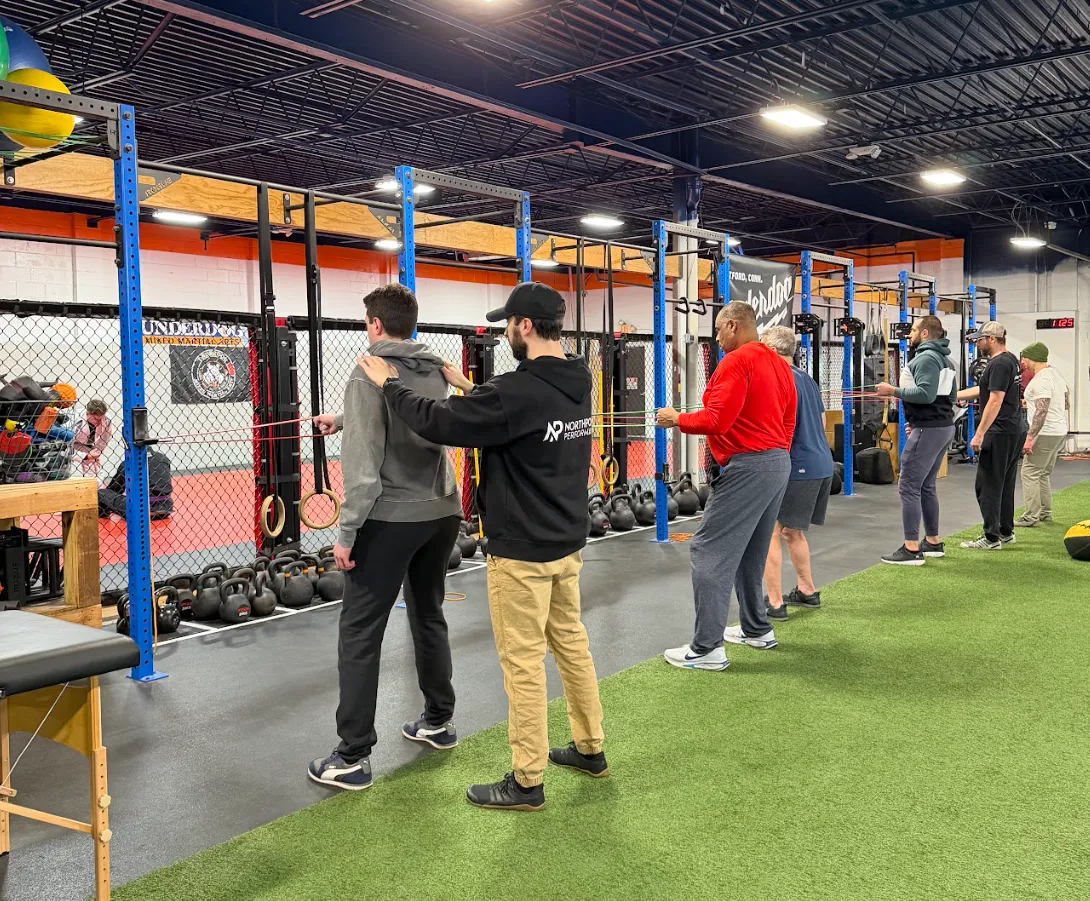
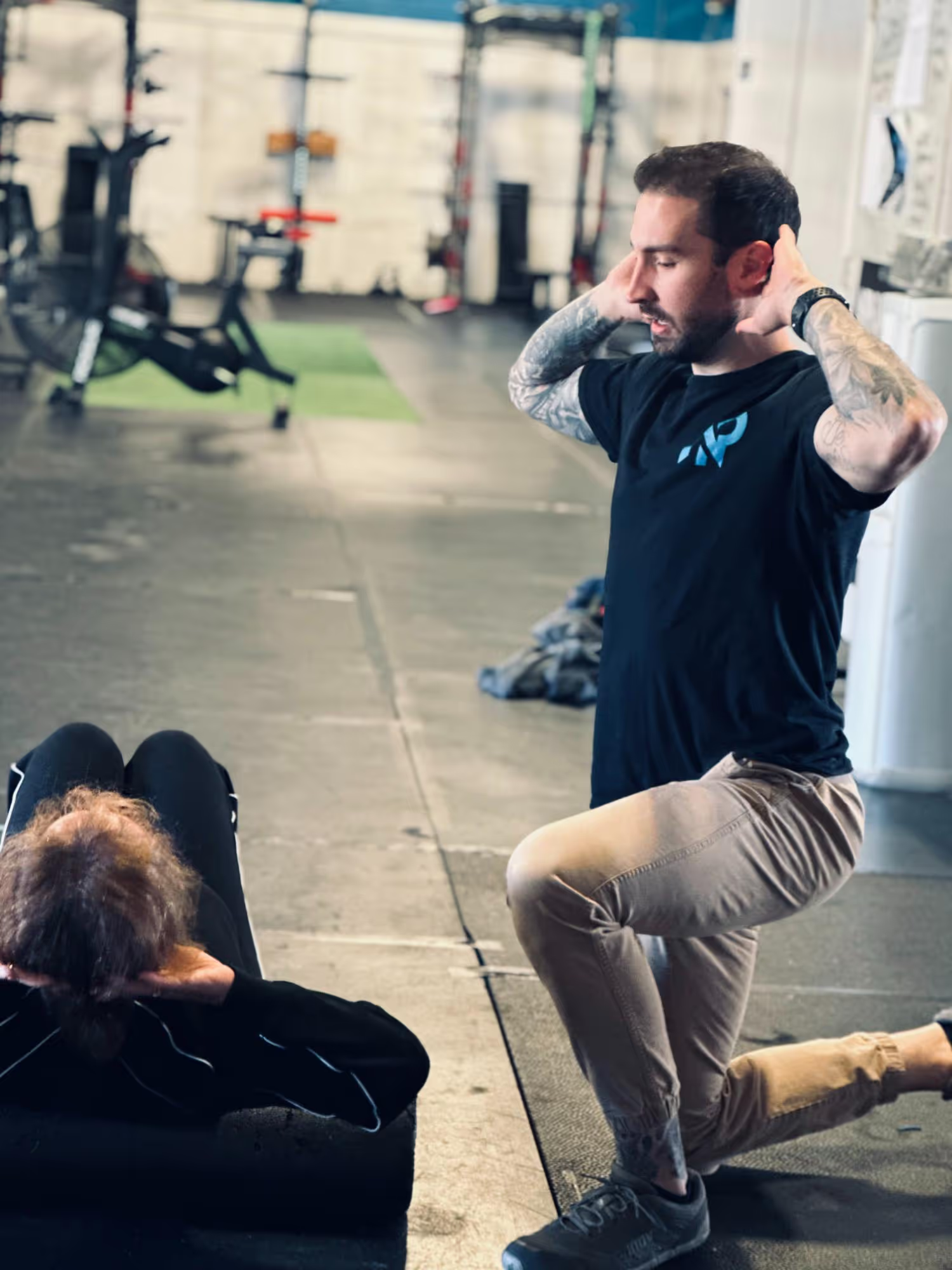
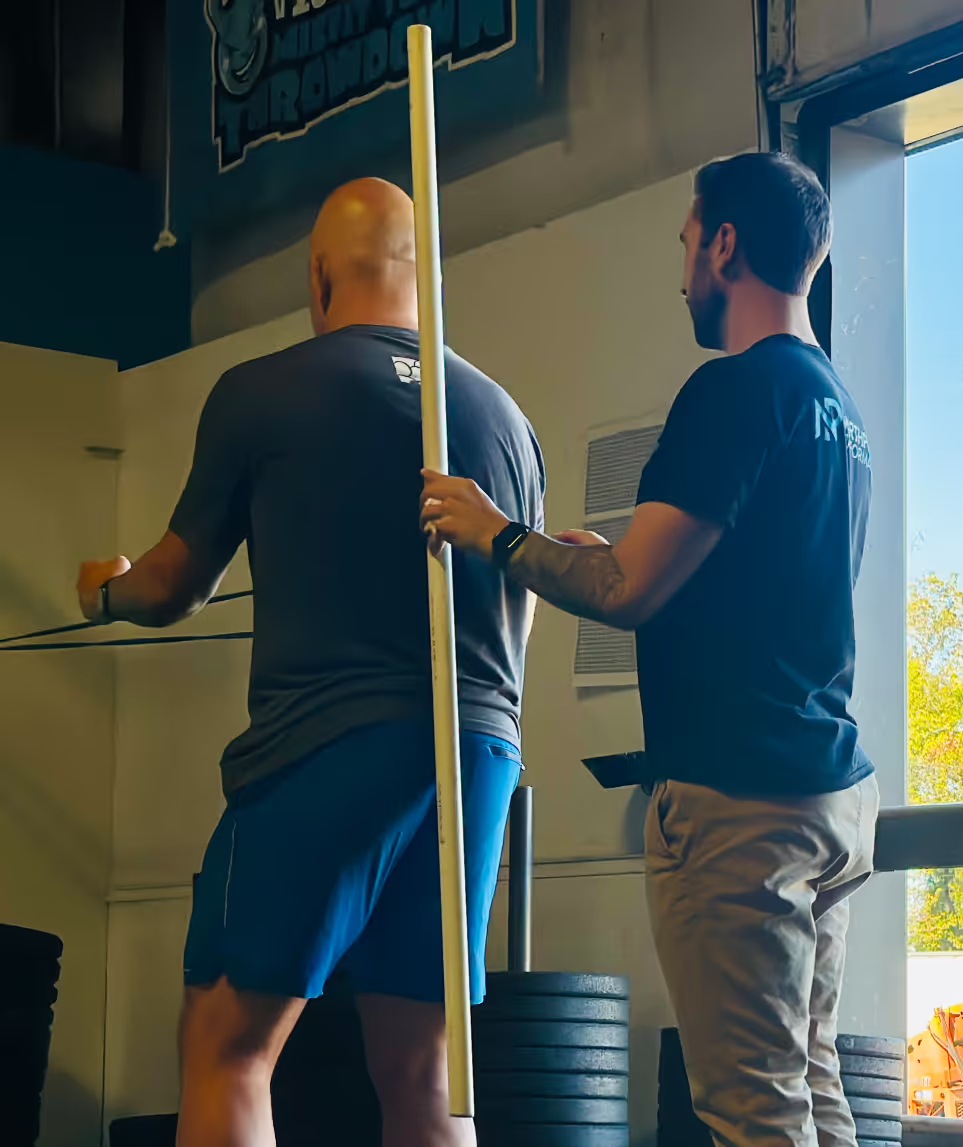
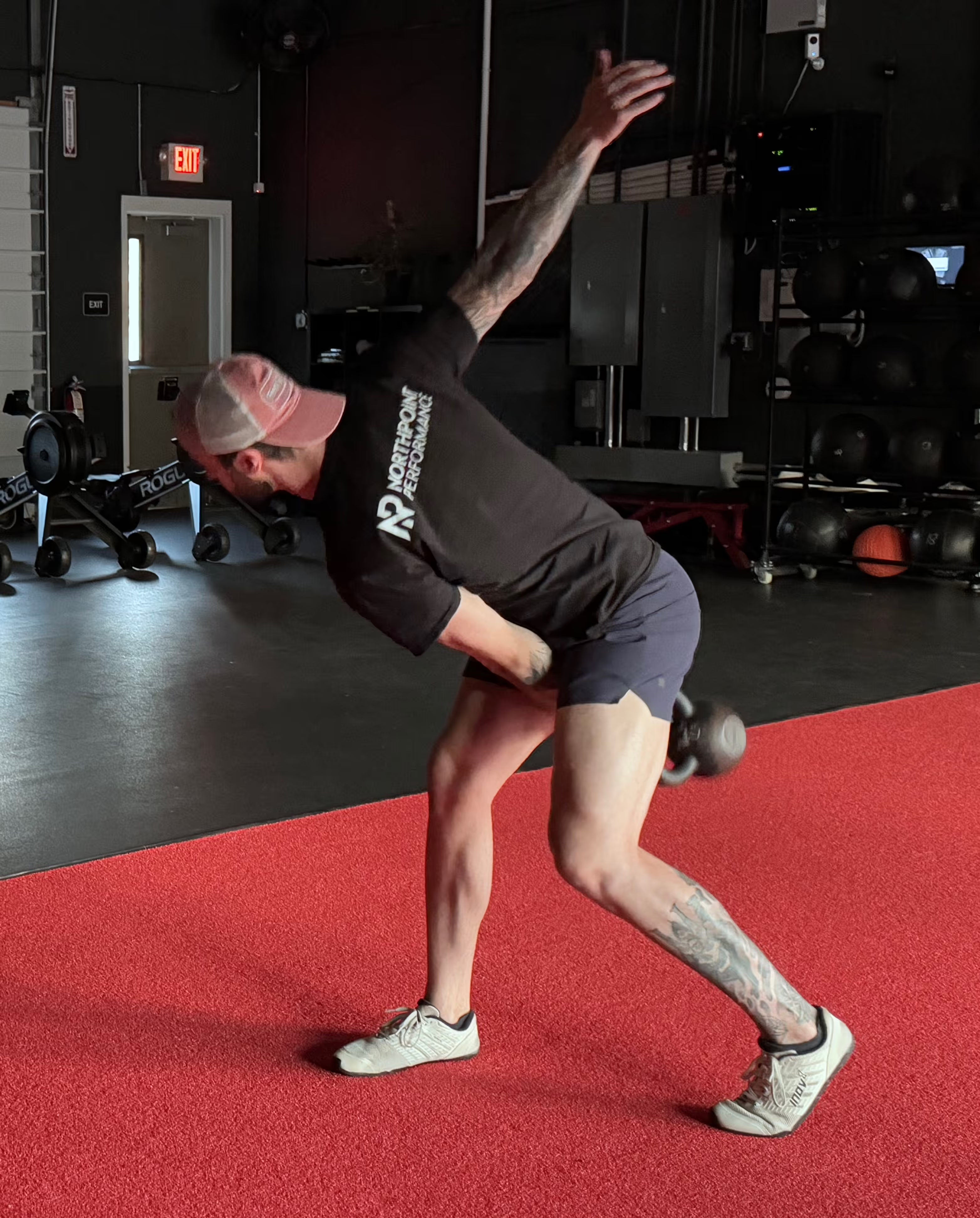
Most running assessments evaluate the foot or knee in isolation — the symptomatic area. At NorthPoint, we evaluate how the full body is loading, rotating, and stabilizing through each stride, because the breakdown that causes knee pain often originates in the hip, ankle, or the way force is absorbed entirely. The plan that follows is built around what the assessment actually finds — not a standard protocol.
Who Comes to NorthPoint for Running Gait Analysis
Runners come to us for gait analysis from many different starting points — some dealing with an injury that keeps returning, others looking to improve efficiency or prevent problems from developing. Below are common presentations this service addresses.
IT band pain, runner's knee, or hip issues that return during or after runs
Achilles, plantar, or calf symptoms that limit mileage or training intensity
Recurring shin splints or stress-related concerns tied to training load
Runners returning from injury who want to identify what contributed to the problem
Athletes told to reduce mileage without a clear explanation of why
Efficiency goals — improving stride economy without increasing injury risk
Runners preparing to return to race training, long runs, or a new volume block
Active adults who want a baseline movement assessment before building a training plan
Reset. Rebuild. Refine.
Reset
A comprehensive evaluation to uncover the root cause and assess how the body is truly functioning as a whole.
Rebuild
A personalized plan designed to restore balance, improve performance, and reduce pain — built around what the evaluation actually found.
Refine
Guidance to maintain changes, build resilience, and continue improving — so results carry forward long after the sessions end.
What Our Clients Are Saying
Real Results From Real Runners.





Frequently Asked Questions
Common questions about running gait analysis at NorthPoint Performance in Enfield, CT.
What does a running gait analysis at NorthPoint involve?
It starts with a full-body, video-based assessment of your running mechanics — stride pattern, foot strike, hip loading, and how the full kinetic chain moves and absorbs force through each step. From that picture, we identify the mechanical drivers behind any pain or inefficiency and build a plan to address them.
How is this different from a running store gait assessment?
A running store assessment evaluates foot strike to recommend shoe fit. At NorthPoint, the analysis is a comprehensive biomechanical evaluation by a Doctor of Physical Therapy — designed to identify the root cause of pain, inefficiency, or injury risk across the full running stride, not just the foot.
Do I need an active injury to benefit from gait analysis?
No. Many runners come in without an active injury — they want to understand their mechanics, improve efficiency, or reduce future injury risk. Whether the starting point is pain, a recent return from injury, or a performance goal, the assessment gives a complete picture of what is driving the stride.
Does NorthPoint Performance accept insurance for this service?
NorthPoint is an out-of-network provider. Clients pay directly, and HSA and FSA are accepted. We provide superbills after each session for clients who want to submit for possible out-of-network reimbursement. We do not guarantee reimbursement — that is between you and your insurance plan.
What happens after the gait analysis session?
You leave with a clear picture of what the assessment found — the mechanical drivers, compensation patterns, and what needs to be addressed. The next step is typically an individualized plan using hands-on care and progressive exercise targeted to what the assessment identified, building toward a more efficient and durable stride.
Still have questions?
Not sure if a running gait analysis is the right starting point?
Your Stride Has an Answer. Let's Find It.
Start with a free phone consultation. We will talk through your running history, what you have already tried, and whether a gait analysis at NorthPoint is the right next step.
.webp)