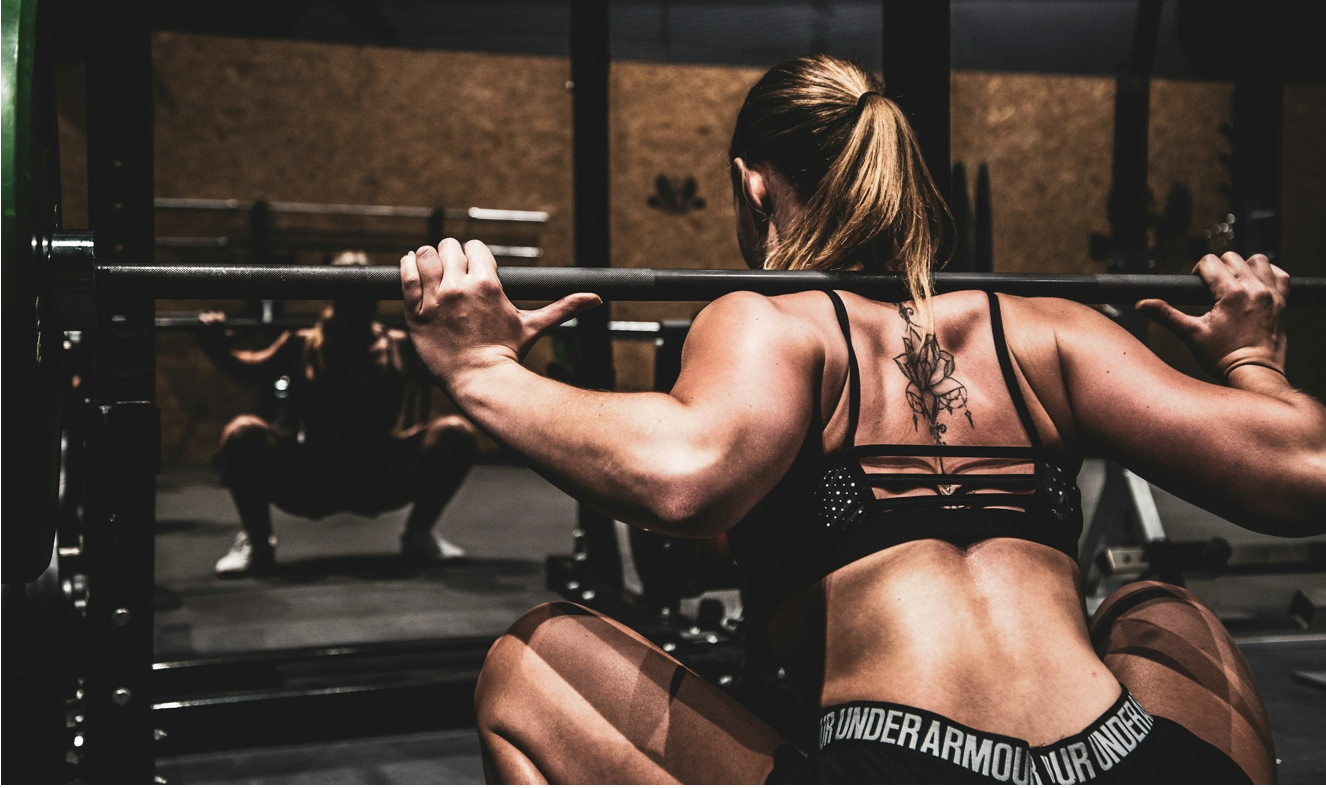
The back squat is one of the most widely used exercises in strength training. It is often treated as a benchmark for strength, function, and even athleticism. There is no debate that it builds muscle and improves one's ability to squat. For athletes training specifically for strength sports or Olympic lifting, that outcome may be appropriate. The issue is not whether the back squat works. The issue is the assumption that loading a back squat should be a priority in training and a meaningful metric for function, athletic performance, or longevity. When examined through the lens of human evolution, gait mechanics, and real-world force demands, that assumption becomes difficult to support.
Why gait is the benchmark for function and athleticism
When evaluating human movement, we use gait as the benchmark for function and athleticism. Not because everyone is a runner, but because gait is the most fundamental expression of how the human body evolved to organize and transfer force. Bipedal locomotion is the one movement pattern all humans share. Walking and running are how the body learned to manage gravity, ground reaction forces, and momentum over long periods of time. Every athletic action sprinting, cutting, jumping, throwing, carrying is a variation or amplification of the same principles found in gait. If a body cannot walk or run efficiently, it cannot reliably perform higher-intensity or more complex athletic tasks without compensating elsewhere. Gait reveals how well the body accepts force at ground contact and transfers force through the foot, leg, pelvis, trunk, and upper body. Unlike isolated strength tests or gym lifts, gait does not allow inefficiencies to hide. Function is not defined by how much force the body can produce once, but by how efficiently it can organize and use force repeatedly over time.
What the back squat actually trains
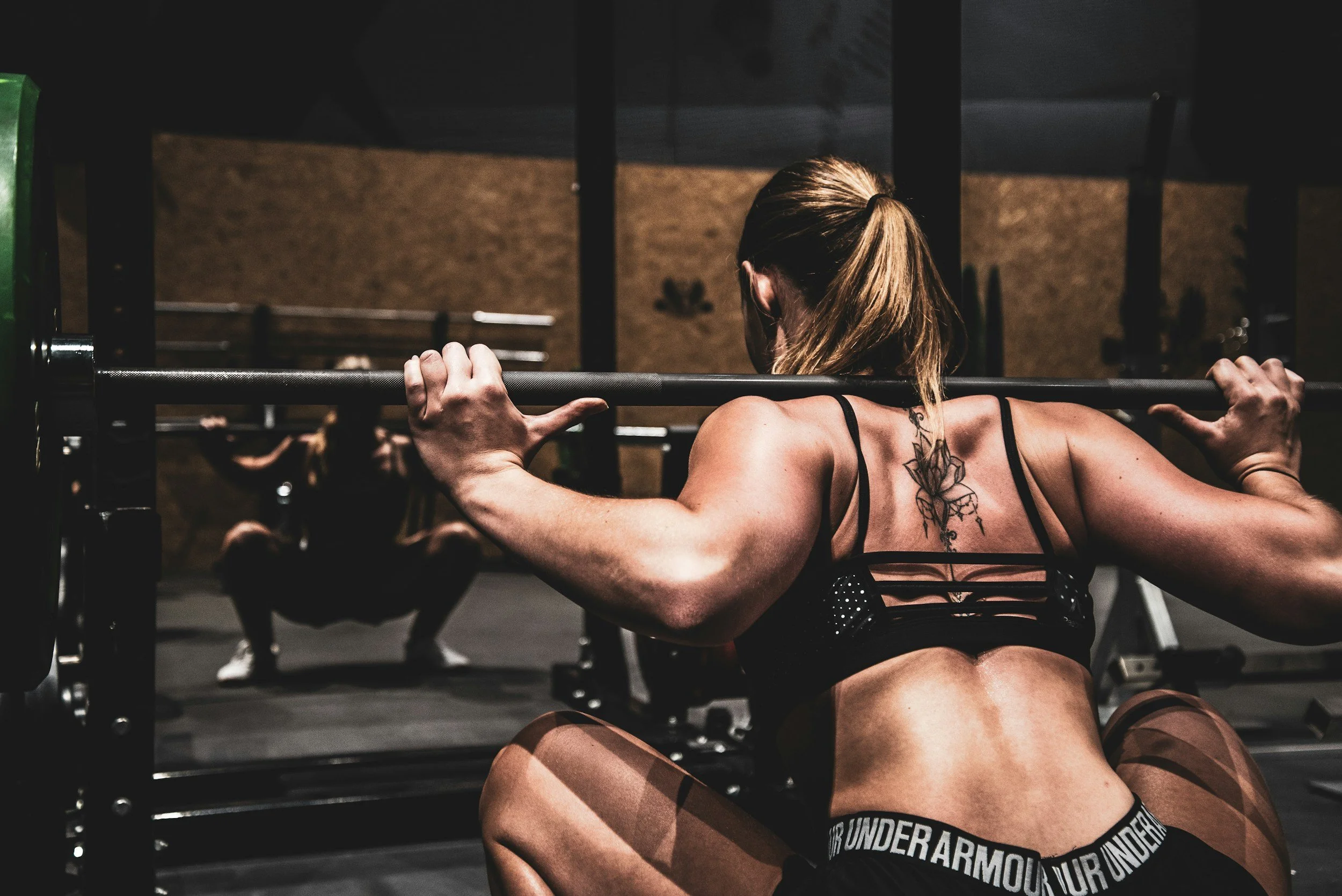
The back squat places a heavy, externally fixed load across the shoulders, driving compressive forces vertically through the spine, hips, knees, and ankles. To tolerate this load, the nervous system adopts a strategy centered on rigidity. Bracing increases, joint motion is reduced, and force is expressed slowly in a linear, sagittal-plane pattern. This strategy is effective for lifting weight straight up and down. It improves load tolerance and local force production in a controlled environment. What it does not train is how the body accepts force, transfers it across segments, or redirects it efficiently during motion.
Muscle development is not the issue, transfer is
It is important to be clear about this distinction. The back squat does build muscle. It does improve maximal strength in the squat pattern. If the goal is hypertrophy or performance in strength-based sports, the back squat can be a useful tool. What it does not reliably do is improve functional movement or athletic performance outside of that specific context. Strength gained under bilateral, symmetrical, vertically loaded conditions does not automatically transfer to walking, running, cutting, or absorbing unpredictable forces.
Human movement is asymmetrical and non-linear
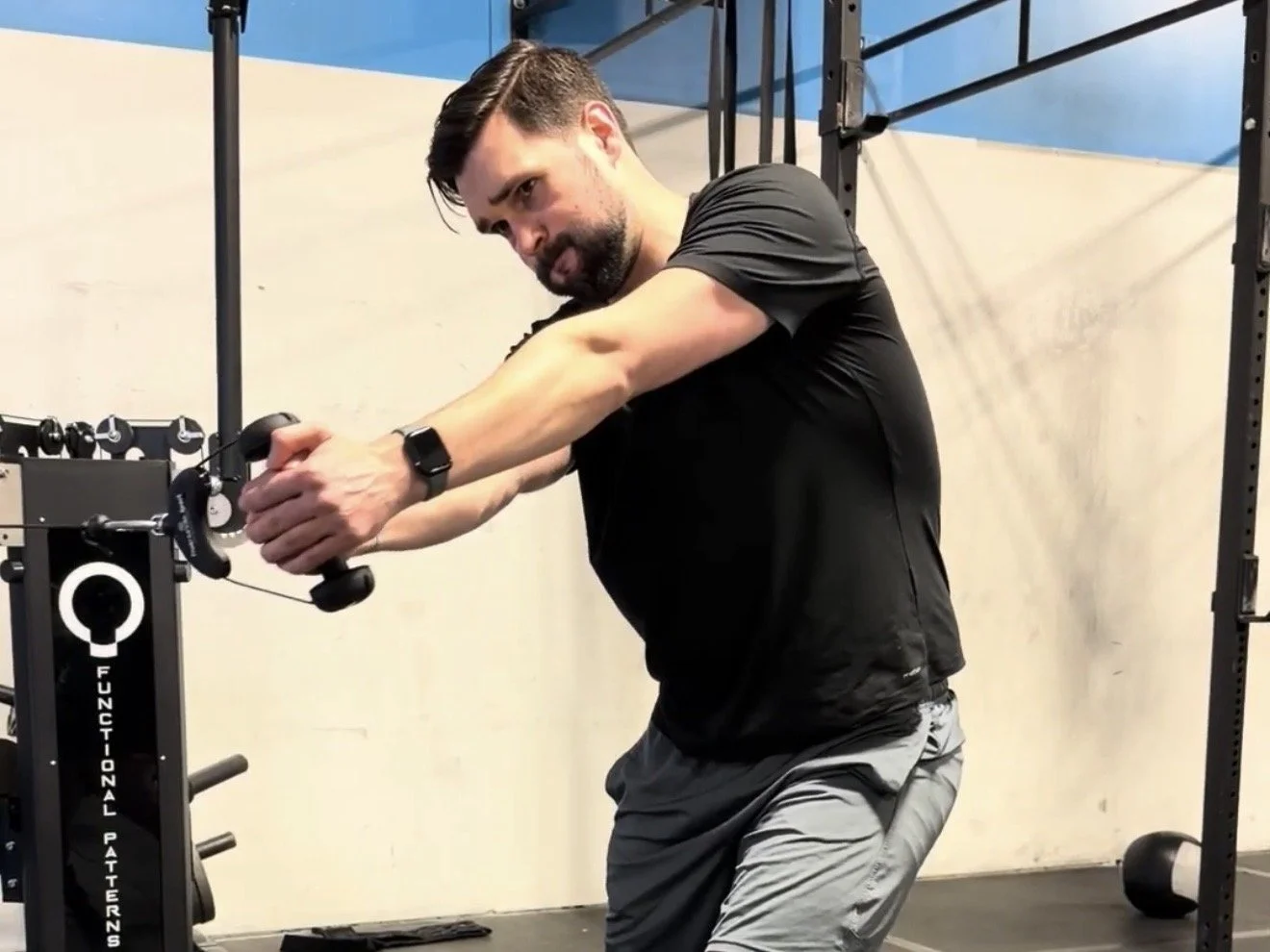
Real human movement is asymmetrical. Force is expressed one side at a time. The pelvis and ribcage rotate in opposite directions, and load is constantly shifting from left to right. Ground reaction forces follow curved, parabolic paths rather than straight vertical lines. Energy is absorbed, redirected, and reused through elastic tissues rather than pushed rigidly against gravity. The back squat removes these characteristics.
Compression does not equal useful force production
Back squats condition the body to tolerate high compressive forces. Over time, this reinforces stiffness as a primary strategy. While this can increase maximal force output in the squat, it does not teach the body how to manage force dynamically. Functional performance depends on the ability to absorb force, transfer it across joints and segments, and redirect it efficiently.
Rotation and multi-planar control are essential, and absent
Rotation is not optional in human movement. Pelvic and trunk rotation allow force generated at the ground to move through the body with less joint stress. Athletic actions such as acceleration, deceleration, and change of direction all depend on rotational and multiplanar mechanics. In the back squat, rotation is intentionally eliminated.
Capacity to squat versus using the squat as a metric
The body needs the capacity to squat. Being able to lower and raise the center of mass with control is a basic human ability. What the body does not need is for the back squat to serve as a benchmark for movement quality, athleticism, or long-term health.
How we train at NorthPoint Performance
At NorthPoint Performance, we train based on how the human body actually uses force in the real world. Because gait is the most fundamental expression of movement, it serves as our reference point for function and athleticism. For runners, our running gait analysis starts there. Our focus is not on how much force you can tolerate under compression, but on how efficiently your body can absorb, transfer, and reuse force through motion. We still build capacity, but we do not use any single lift as a benchmark for movement quality or longevity.