Stop Googling Exercises and See a Physical Therapist
If you’ve been dealing with pain for weeks or months, there’s a good chance your search history looks something like this:
“Best exercises for shoulder pain.”
“Stretches for sciatica.”
“How to fix knee pain naturally.”
And honestly, that makes sense.
Most people are trying to solve their problem before committing to professional help. The internet makes it seem like if you can just find the right stretch, mobility drill, or strengthening exercise, everything will finally click.
Sometimes it helps.
A lot of the time, though, people end up stuck in an endless cycle of trying random exercises without ever understanding why the pain keeps coming back.
That’s because exercises without context are often just educated guesses.
The Internet Can’t Assess How Your Body Moves
One of the biggest problems with Googling exercises for pain relief is that pain itself doesn’t tell the full story.
Two people can have the exact same symptoms and need completely different approaches. One person may genuinely need more strength and loading. Another person may already be overloading the area because of poor movement mechanics and compensation patterns elsewhere in the body.
The internet cannot assess:
How you walk
How you transfer force through the body
How your posture and movement mechanics interact
Whether another area is placing excess stress on the painful region
Whether you are even performing the exercise correctly
That’s where many people get stuck. They keep trying harder, but they’re still guessing.
More Exercises Does Not Mean Better Progress
Most people eventually start collecting exercises from everywhere. A few from Instagram. A few from YouTube. Something they saw on TikTok. Something a friend recommended at the gym. Maybe even exercises from an old physical therapy program. Eventually they have a long list of exercises but no real direction.
The issue is usually not a lack of effort. Most people are genuinely trying to get better.
The issue is a lack of structure and individualized guidance.
Good physical therapy and movement coaching should simplify things, not make them more complicated. You should understand what you’re working on, why you’re doing it, and what progress should actually look like. Otherwise, people just bounce from symptom to symptom while hoping something finally works.
When Pain Keeps Coming Back
One of the biggest signs it’s time to stop self-managing is when the pain keeps returning no matter what you do.
You stretch it and it temporarily feels better. Then it tightens right back up.
You foam roll it and the symptoms calm down for a few hours. Then the pain returns the next time you train, sit too long, or go through a normal day.
That usually means the painful area may not actually be the primary problem. Often the body is compensating around something else. The area that hurts is frequently the area absorbing stress repeatedly, not necessarily the area creating the issue.
People can spend months trying to “release” or “mobilize” the same spot while completely missing the movement mechanics driving the problem in the first place.
When Pain Starts Affecting Your Daily Life
Another sign it may be time to see a physical therapist is when you notice yourself reorganizing your life around pain.
Maybe you stop lifting weights. Maybe you avoid running. Maybe you sit differently, sleep differently, or constantly think about how your body feels throughout the day.
At that point, the issue is no longer just an occasional annoyance. It starts affecting movement confidence, performance, and overall quality of life.
That’s where individualized physical therapy and movement assessment become valuable.
What Good Physical Therapy Should Actually Do
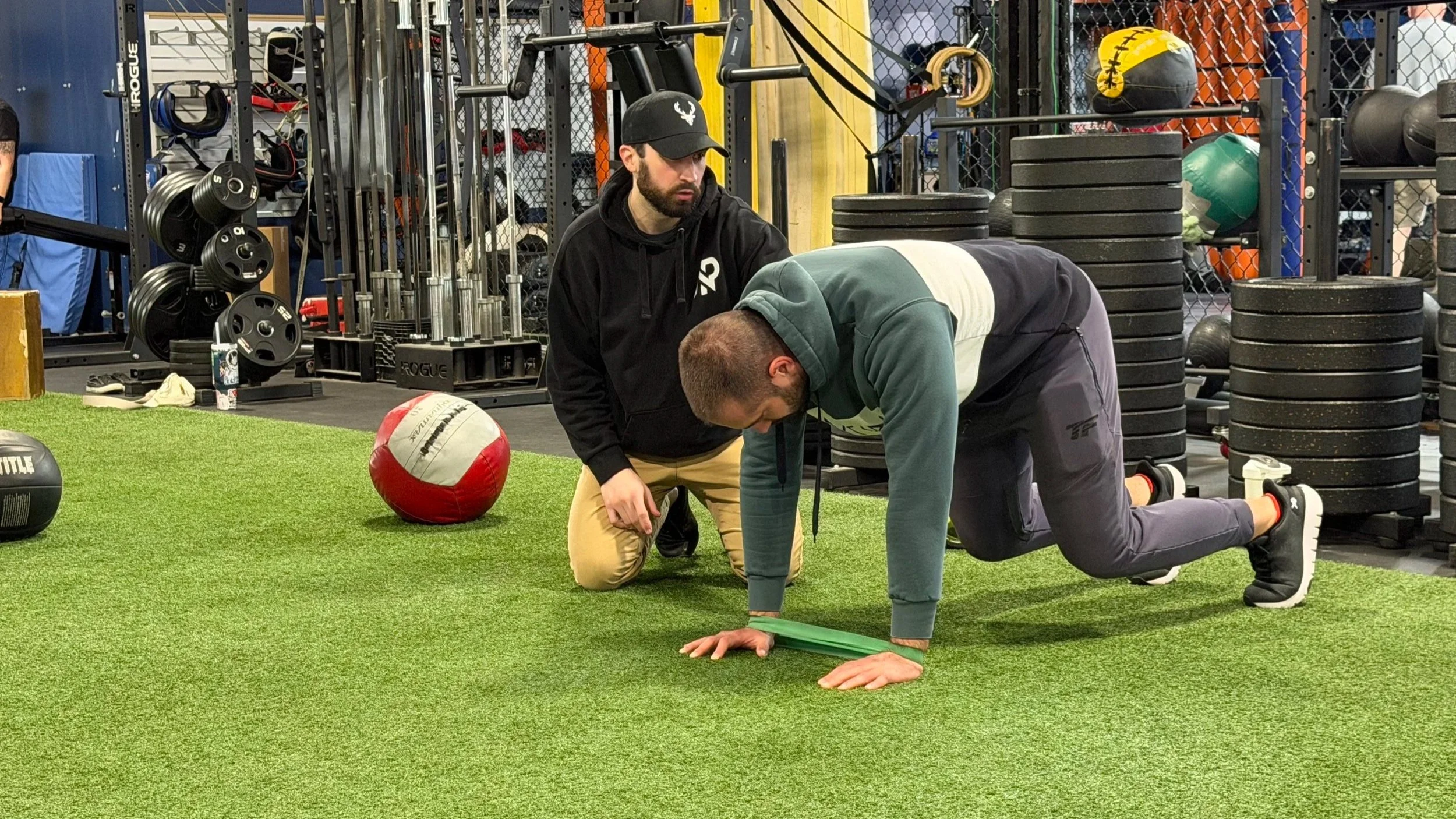
A good physical therapy evaluation should not feel like somebody handing you random exercises and sending you on your way.
You should leave with clarity. You should understand what is likely contributing to the issue, what your body is compensating around, and what the priorities are moving forward.
The goal is not dependency on treatment forever.
The goal is building a body that moves more efficiently, tolerates stress better, and no longer forces you to guess your way through the process.